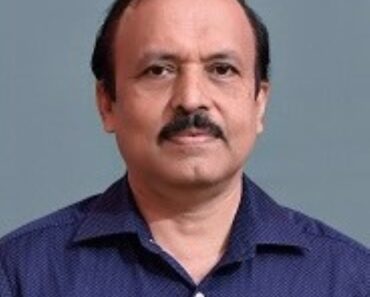
Chintamani Nagesa Ramachandra Rao is an Indian Chemist who has worked for the most part in Solid-state chemistry and structural chemistry and has received honorary doctorates from more than 80 Universities throughout the globe. He has almost 1800 research papers and over 50 books published to his name. Except for the Nobel Prize, C. N. R. Rao has won almost all prominent awards related to the field of science.
Wiki/Biography
C. N. R. Rao was born on Saturday, 30 June 1934
obtain a master’s degree in chemistry as advised by one of his college lecturers Rao joined Purdue University, USA, and worked under Professor R L Livingston for his PhD degree. In 1958, Rao completed his PhD in two years and nine months, a record of its kind. His first research paper was issued in the Agra University Journal of Research in 1954.
Physical Appearance
Height (approx.): 5′ 4″
Hair Colour: Grey
Eye Colour: Black
Family & Caste
Rao belongs to an educated Kannada-speaking Deshastha Brahmin family.
Parents & Siblings
Rao’s father, Hanumantha Nagesa Rao, was an Inspector of Schools in Mysore State. He was a highly educated person with a master’s degree in history, economics, and political science. His mother, Nagamma Nagesa Rao, was the most influential person in Rao’s childhood and had great knowledge of arithmetic and Hindu literature. He was the only child of his parents.
Wife & Children
Rao got married to Indumati Rao in 1960. They have two children, a son named Sanjay, and a daughter named Suchitra. His wife, Indumathi Rao, works in an honorary capacity for the promotion of science at JNCASR. His daughter, Suchitra, is married to K.M. Ganesh, the director of the Indian Institute of Science Education and Research (IISER) in Pune, Maharashtra. His son, Sanjay Rao is engaged in making the field of science more common in the schools around Bangalore.
Religion
C. N. R. Rao follows Hinduism.
Career
Teaching
He returned to India in 1959 after completing his PhD at Purdue and joined the Indian Institute of Science in Bangalore as a lecturer on a monthly pay of rupees five hundred. When he joined the IISc, the institute had only six Ph.D. students. The facility at that time had few or no resources, and he once described the situation by saying,
You would get string and sealing wax and that’s about it.”
In 1963, he was appointed as Head of the Chemistry Department at IIT Kanpur by its director PK Kelkar. With the arrival of Rao, the department became one of the best places for chemistry in India. After, serving at IIT Kanpur, from 1963 to 1976, Rao came back to IISc Bangalore and established a new unit of solid-state chemistry and structural chemistry.
CNR Rao set up the Solid State and Structural Chemistry Unit (SSCU) in 1976 on an invitation from Satish Dhawan (left)
Later, he served as the Director of the IISc, from 1984 to 1994. During his tenure as Director of the IISc, he took the institution to newer heights. He gathered massive support for research and improving infrastructure. A new faculty was also recruited under his supervision in all the departments. He has also paid visits as a professor at several universities like Purdue University, the University of Cambridge, the University of California Santa Barbara, and the University of Oxford. From 1983 to 1984, Rao served as the Jawaharlal Nehru Professor at the University of Cambridge and Professorial Fellow at King‟s College, Cambridge. He Founded the Jawaharlal Nehru Centre for Advanced Scientific Research, Bangalore in 1989 and has been serving as the Honorary President. He is also holding the position of Linus Pauling Research Professor and has been working as the National Research Professor.
Working with the Prime Minister
Rao has headed the Scientific Advisory Council to the Prime Minister of India under Prime Ministers Rajiv Gandhi (from 1985 to 1989), and Manmohan Singh (from 2005 to 2014).
He also headed the council when Narendra Modi became the Prime Minister in 2014.
He established the Chemical Research Society of India in 1999 and the Materials Research Society of India in 1989, two major research institutions.
Research
Rao’s career began with spectra and structure of molecules but later his research interests shifted totally to solid-state and materials chemistry surface science and related areas. In a period, when this subject was not much popular among researchers, and very few people were active in this area, Rao, initiated the work in solid-state and materials chemistry. His two books on Ultraviolet & Visible Spectroscopy, and Infrared Spectroscopy made his name popular around the globe. In the mid-1980s, he discovered that the insulating, antiferromagnetic cuprates (La2CuO4) are almost two-dimensional layered compounds and are strongly linked-driven Mott insulators.
Rao made a major advancement when he independently synthesized 123 cuprates, the first liquid nitrogen temperature superconductor; cuprates are considered to show superconductivity under high-temperature conditions. Later, he came across the other series of superconductors as well. He was responsible for the first synthesis and characterization of the unusual Y junction carbon nanotubes, which was mastered in his laboratory in the mid-1990s. A lot of discoveries have been made by Rao in the field of Processes and Materials from hydrogen bonding to metal-insulator transition in solids, surface chemistry, novel superconductors, framework solids, spectroscopy, fullerenes, carbon nanotubes, colossal magnetoresistance compounds, graphene, nanowires, and water splitting.
Controversies
Plagiarism
Rao has faced various allegations of plagiarism. Rao and Saluru Baba Krupanidhi (Chairman, Materials Research Centre, Indian Institute of Science (IISc)), along with Basant Chitara (IISc) and L S Panchakarla (Jawaharlal Nehru Centre for Advanced Scientific Research), issued a research paper on graphene and claimed that it was first published in the online edition of Advanced Materials” in July 2011. After the publication, the Journal notified them about the issue, related to a couple of lines of the text matched exactly with a previous publication “Applied Physics Letter” in 2010, which triggered the row. Later, Rao offered to withdraw the research paper, but the committee denied it as they wanted it to be examined by a technical panel. The journal later accepted the paper on scientific grounds. Following this, Rao’s group issued an apology note in the December issue of the same journal saying,
“The corresponding authors regret the reproduction of the text from an article that appeared in ‘Applied Physics Letters’ (S Ghosh, B K. Sarker, A Chunder, Lei Zhai, S I Khondaker, ‘Appl Phys Lett 2010, 96, 163109)’ in their paper. The corresponding authors sincerely apologise to readers, reviewers, and editors for this oversight and any miscommunication.” ((Deccan Herald))
Bharat Ratna
Rao was awarded Bharat Ratna by the Government of India in 2013. It created a controversy when two students, Tanaya Thakur, and Aditya Thakur, filed a PIL in the Allahabad High Court, Lucknow Bench, but it was ruled out later by the court, stating it as a “publicity stunt.” They protested against the award given to Rao and said,
A scientist with proven cases of plagiarism shall not be presented the highest civilian award and hence the award notification needs to be quashed.” ((India Today))
Controversial remarks on Politicians
During a Press Conference, Rao created a national outrage when he referred to the Indian politicians as “Idiots” due to the insufficient funding of scientific research. Rao justified his comments later by saying,
Unfortunately, I was quoted as saying I called somebody ‘idiots’ - but I did not do that. I won’t call anyone an idiot unless I am sure. ‘Idiotic’ is a word used in diplomacy. You know, you can do idiotic things - like I sometimes do idiotic things.” ((NDTV))
Legacy
- Rao and his wife, Indumati Rao, started the CNR Rao Education Foundation in Jawaharlal Nehru Centre for Advanced Scientific Research in 2005, with the help of the million-dollar Dan David Award from Tel Aviv University. It aims to promote good quality science education, among young students and science teachers at school and pre-university levels.
- TWAS-C.N.R. Rao Award for Scientific Research was created in 2006 to honour scientists from the Least Developed Countries (LDCs) for their remarkable contributions to the field of science.
- The SASTRA-CNR Rao Award was created in 2014 by SASTRA University for the work done in the field of chemistry and material science. The winner also receives a cash prize of 5 Lakh and a citation.
- Rao founded the International Centre for Materials Science (ICMS) in 2010. He is a member of the Board of the Science Initiative Group and also serves as the Director. ICMS has been honouring the scientists with the C N R Rao Prize Lecture in Advanced Materials since 2010.
Awards and Honours
International
- Hevrovsky gold medal, Czechoslovak Academy of Sciences (1989)
- Honorary fellowship, the Royal Society of Chemistry, London (1989)
- Blackett lectureship, the Royal Society, London (1991)
- Albert Einstein Gold Medal, UNESCO, Paris (1996)
- Linnett visiting professorship, University of Cambridge (1998)
- Centenary lectureship and medal, Royal Society of Chemistry, London (2000)
- Hughes medal for physical sciences, the royal society, London (2000)
- Officier de l’ordre des palmes academiques, France (2002)
- Order of scientific merit, grand-cross, president of Brazil (2002)
- Gauss professorship, the Academy of Sciences, Gottingen, Germany (2003)
- Somiya Award of the International Union of Materials Research Society (IUMRS) (2004)
- The Dan David Prize for Science in the Future Dimension in the field of Materials Science (2005)
- Chemical pioneer, American Institute of Chemists, USA (2005)
- Chevalier de la légion d’honneur by the President of the French Republic (2005)
- Honorary fellowship, institute of physics, London (2006)
- Nikkei Asia Prize for Science, Technology and Innovation from Japan (2008)
- Order of Friendship, by the President of Russia (2009)
- The Royal Medal (the Queen’s medal), by the Royal Society, London, UK (2009)
- The August-Wilhelm-von-Hoffmann medal for outstanding contributions to chemistry by the German
- Chemical Society (2010)
- A.D. Little Lecturer in Chemistry, Massachusetts Institute of Technology (2010)
- Ernesto Illy Trieste Science Prize (2011) for Materials Research
- Albert Einstein professor of the Chinese Academy of Sciences and international award (gold medal) of the
- Chinese Academy of Sciences (2012)
- Order of the rising sun, gold and silver star by the emperor of Japan (2015)
- Wigner memorial lecture, Oakridge (2015)
- Presidential distinguished visitor, Temple University (2015)
- The Emperor of Japan bestowed the order of the rising sun, Gold and Silver star (2015)
- The highest award for materials research, the von Hippel Award by the Materials Research Society (2017)
- The Centre for Advanced Materials of Ras Al Khaima has conferred the first Sheikh Saud International Prize for Materials Research (2019)
- ENI International Award for Research in Energy Frontiers (2020)
National
- DSc from Mysore University (1961)
- Bhatnagar Prize in Chemical Sciences, Council of Scientific and Industrial Research, India (1968)
- Padma Shri (1974)
- P.C. Ray Medal in Chemistry, University of Calcutta (1975)
- C. V. Raman Award in Physical Science by the University Grants Commission of India (1975)
- FICCI Award in Physical and Mathematical Sciences, Federation of the Indian Chambers of Commerce and Industry (1977)
- S.N. Bose Medal for Physical Sciences, Indian National Science Academy (1980)
- Karnataka State Award (1982)
- Distinguished Alumnus Medal, Indian Institute of Science (1983)
- P.C. Ray Medal, Indian Chemical Society (1984)
- Padma Vibhushan (1985)
- Jawaharlal Nehru Award for Scientific Research (1988)
- C.V. Raman Centenary Medal (1988)
- Meghnad Saha Medal, Indian National Science Academy (1990)
- Golden Jubilee Prize in Physical Sciences, Council of Scientific & Industrial Research, India (1991)
- Mrsi Prize in Superconductivity and Materials Science (1992)
- Distinguished Materials Scientist Medal, MRSI (1993)
- Karnataka Ratna, Highest honour of the State of Karnataka (2001)
- India Science Award - First recipient of the highest scientific recognition of the Government of India (2004)
- Sarvadhikari Medal, Calcutta University (2004)
- Dhirubhai Ambani Lifetime Achievement Award for Innovation (2011)
- Bharat Ratna (2014)
Fellowships
- Fellow of the Indian Academy of Sciences (1965)
- Fellow of the Indian National Science Academy (1974)
- Fellow of the Royal Society (1982)
- Founding Fellow of The World Academy of Sciences (1983)
- Honorary Fellow of the Royal Society of Chemistry (1989)
- Foreign Member of the Academia Europaea (1997)
- Honorary Fellow of the Institute of Physics (2007)
Member
- National Academy of Sciences
- American Academy of Arts and Sciences
- Royal Society of Canada
- French Academy, Japanese Academy
- Serbian Academy of Sciences and Arts and Polish Academy of Sciences
- Czechoslovak Academy of Sciences
- Serbian Academy of Sciences
- Slovenian Academy of Sciences
- Brazilian Academy of Sciences
- Spanish Royal Academy of Sciences
- National Academy of Sciences of Korea
- African Academy of Sciences
- The American Philosophical Society
- Pontifical Academy
Honorary doctorates
Rao has Honorary Doctorates from 71 Universities.
Facts/Trivia
- C. N. R. Rao is known as the father of Indian Nanotechnology.
- C. N. R. Rao has penned down almost 1800 Research papers and over 50 books.
- Rao is technophobic and avoids using mobile phones; he only uses his mobile to talk to his wife.
- Rao is fond of listening to music and describes it as “therapeutic”.
- Rao goes for a morning walk and practices yoga every day.
- He likes to cook Thai, Hawaiian, Chinese, Italian, and South Indian food.