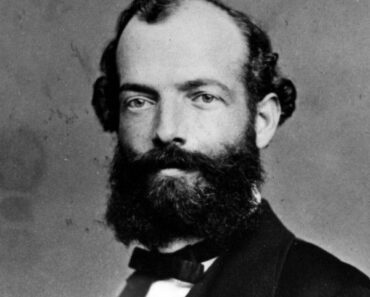
August Karl Johann Valentin Köhler (1866-1948) was a German professor and expert microscopist known for his microscope illumination technique of Köhler illumination. He was also the early staff member of Carl Zeiss AG in Jena, Germany where he worked for 45 years. He died on 12 March 1948.
Wiki/Biography
August Köhler was born on Sunday, 4 March 1866 (age 82 years; at the time of death) in Darmstadt, Hessen, Germany. His zodiac sign is Pisces. He studied at the Ludwig-Georgs-Gymnasium in Darmstadt until 1884. Later, he attended the Technical University in Darmstadt and the universities of Heidelberg and Giessen.
Family
Parents & Siblings
August Köhler’s father, Julius Köhler, was a Chief accountant (Oberrechnungsrat). His mother’s name is Marie Köhler.
Wife & Children
August Köhler was married to Ida Köhler.
Career
Academic Career
August Köhler graduated with a teaching degree in 1888. Further, he started teaching at gymnasiums in Darmstadt and Bingen. Later, he worked as a student instructor and assistant to Professor J.W. Spengel at the Zoological Institute at the University of Giessen, Germany. He received his doctorate under Johann Wilhelm Spengel from the University of Giessen in 1893 for writing a thesis on the taxonomy of limpets. He later taught grammar to schoolchildren in Bingen for many years. After seeing Köhler’s impressive work on microscope illumination, Siegfried Czapski invited him to work at the Zeiss Optical Works company in Jena, Germany in 1900. During his time at Zeiss, he contributed to the development of modern light microscope design. In 1922, he started working as a professor of microphotometry at the University of Jena. He became the head of the Department of Microscopy, Microphotography and Projection at Zeiss in 1938. August Köhler remained with Zeiss as a physicist for 45 years until his retirement in June 1945.
Köhler illumination
August Köhler developed the technique of Köhler illumination when he was working as an assistant to Professor J. W. Spengel at the Institute of Zoology at the University of Giessen, Germany. At that time, Köhler was dealing with issues related to microphotography which were difficult because of the limited light response of photographic emulsions of that period. The non-uniform illumination field exhibited by gas lamps resulted in uneven backgrounds in photomicrographs. Köhler extensively worked on photomicrography; however, he faced many issues following which he devised a unique microscope configuration that used both a field and an aperture iris diaphragm (also known as double diaphragm illumination); it resulted in an evenly illuminated field of view and an optimum contrast; moreover, the result was without having any obscuring glare. He published his work of Köhler Illumination in a German microscopical journal (Zeitschrift für wissenschaftliche Mikroskopie) at the end of 1893.
The following year, an English translation of ‘Köhler Illumination’ was published in the British journal of the Royal Microscopical Society. Modern microscopes, even today, use the technique devised by Köhler, especially for phase contrast, epifluorescence, differential interference contrast, and confocal microscopy.
Other Inventions
He made many other important contributions to the field of science. August Köhler and his colleague, Moritz von Rohr, at Zeiss developed a microscope that worked in the ultraviolet region of the electromagnetic spectrum in 1904. This invention paved the way for new possibilities for ultraviolet and fluorescence microscopy. In 1909, Köhler discovered grid radiation, a method commonly used in the 1930s for the treatment of tumours. Köhler’s suggestion in 1911 resulted in the development of the parfocal lens, enabling an image to remain in focus when changing magnification on a microscope.
Patents
While working at Zeiss, he filed at least 35 patents in the USA and Europe that included projection methods and illumination for kinematographs, microscope applications, and light and dark field illumination, among many others. He registered for a patent for his fixed-ocular microscope design on 16 April 1924 in Germany. He filed for the patent of the same invention in the United States on 31 March 1925.
Death
August Köhler died on 12 March 1948 in Jena, Germany.
Facts/Trivia
- In 1934, he received an honorary medical doctor degree from the University of Jena, Germany.
- The significance of Kohler’s work was realised a lot later when he was invited to join the Carl Zeiss AG company in 1900 based on his invention.
- In 1994, almost 100 years after the first publication of Köhler’s work on microscope illumination, the Royal Microscopical Society reprinted a translation of his original article titled ‘A New System of Illumination for Photomicrographic Purposes.’ This article included the original woodcut drawing portraying the microscope optical train, and also a re-labelled colour version.
- His invention of Köhler Illumination has also contributed to several applications in the field of biology, one of them being fine-structure analyses of diatoms.